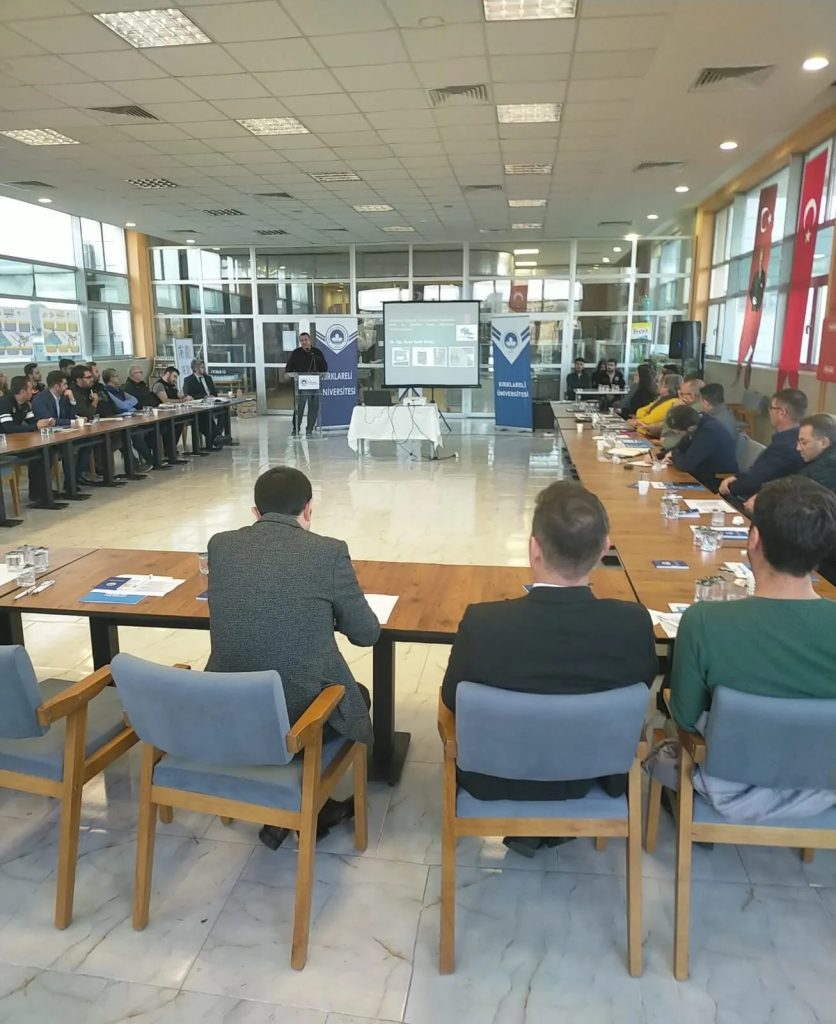


Kırklareli University Faculty of Engineering Department of Civil Engineering Dr. Lecturer Member Kadir Kılınç made a presentation titled “Implementation of Risk and Hazard Tracking System in Buildings Before and After the Earthquake”.
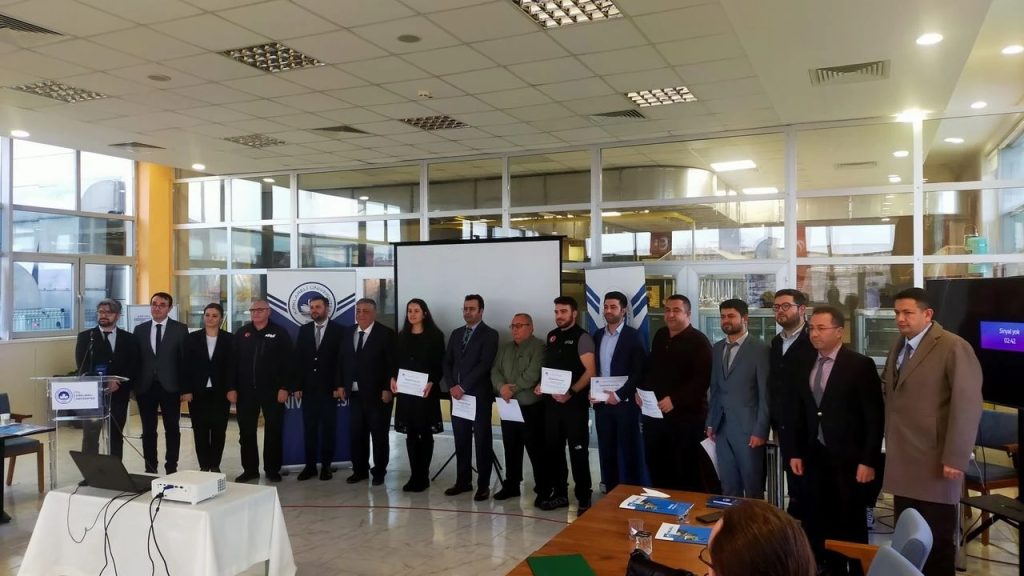
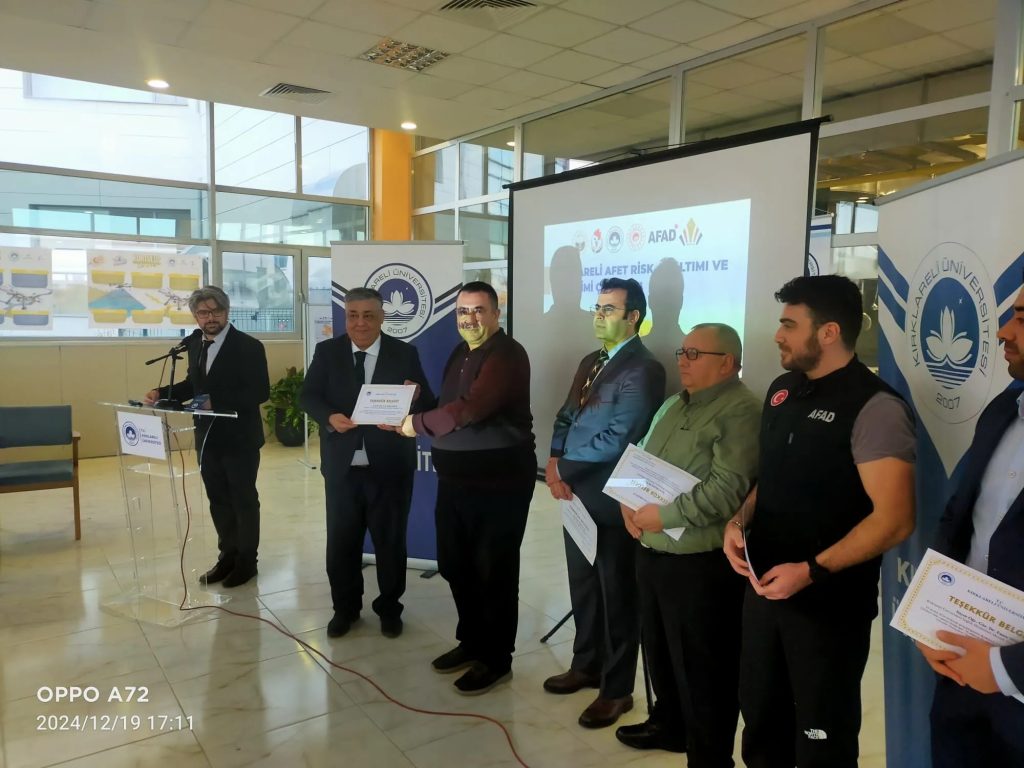
On Thursday, December 19 (yesterday) at Kırklareli University Gastronomy Presentation Hall, under the coordination of Kırklareli Governorship; “Kırklareli Disaster Risk Reduction and Management Workshop” was organized in cooperation with Kırklareli Municipality, Kırklareli University, Kırklareli Provincial Directorate of Environment, Urbanization and Climate Change, Kırklareli Provincial Disaster and Emergency Directorate and Trakya Universities Association.
In the workshop, Kırklareli University Faculty of Engineering Department of Civil Engineering Dr. Lecturer Member Kadir Kılınç made a presentation titled “Implementation of Risk and Hazard Tracking System in Buildings Before and After the Earthquake”. Kılınç emphasized that this system aims to minimize the loss of life and property in an earthquake.
In his statement, Kılınç said; “Monitoring building mobility before and after a disaster is an issue that should be given great importance.
The building mobility monitoring system can be used to detect risk and danger in the building before and after the disaster. Building mobility monitoring is a decision support system that continuously monitors and evaluates the behavior and structural integrity of buildings. This system generally works integrated with sensors, data collection devices and data analysis software. In this way, early warnings can be provided in cases where structures show signs of any abnormality or potential problem and necessary precautions can be taken. This system stands out as a mobile system. The system can be installed in the field in a very short time, such as 10-15 minutes. Data can be collected in the building mobility monitoring system. This system can precisely determine risk mobility from up to 150 meters away from the structure. “At the same time, the slope and movement of the structures can be monitored wirelessly,” he said.
Kılınç continued his statements as follows;
“As a result, it is aimed to minimize the loss of life and property. The system can be transferred to the scene of the incident in a very short time before or after the disaster, and can share the risk status of the field by starting direct measurements without the need for any energy in the field. The system can operate with solar energy without needing energy. Additionally, the system is monitored with a camera. The camera is activated in the system and the resulting image can be sent to the center. It can be emphasized that deformations or settlements in the structure pose a significant safety hazard, especially during construction works in the building itself or in its immediate surroundings.
Thanks to this system, the risk and dangerous areas that may occur in the closed tunnel of the transportation line in the metro and light rail systems, which are the most important parts of transportation in the city, and in the lines continuing on the ground, can be monitored 24 hours a day. In this way, it is possible to protect the transportation line by taking precautions long before the safety of life and property becomes a danger. In this system, crack sensors are used to monitor structural defects and cracks.
As a result, the risk mobility of the structure can be monitored instantly.”
At the end of the event, Kılınç said; “I would like to thank everyone who contributed to the organization of the workshop,” he said.